
Springfield Lakes, Massive Ground Cracks, Subsidence and Wall Cracks
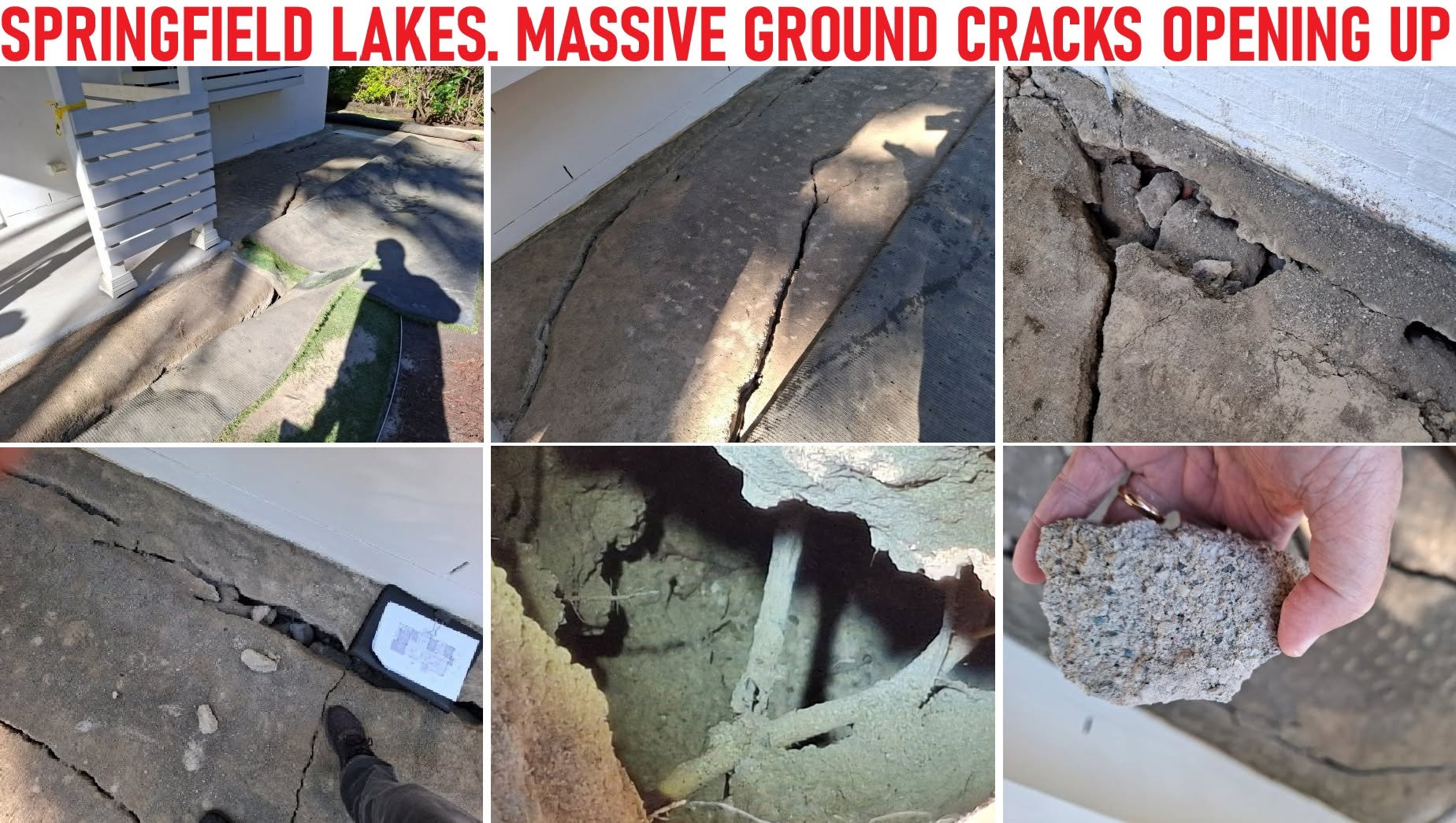
This property in Springfield Lakes has massive ground cracks & subsidence. The property’s front yard looked like a landslip, leaving the owner concerned that the block and house were unstable. Fortunately, the property manager contacted Forensic Engineers to thoroughly investigate and report on the land and house.
We determined the extent of the damage, the cause and the necessary steps to stabilize and repair the peoperty
𝙏𝙝𝙞𝙨 𝙞𝙨 𝗮𝗻 𝗲𝘅𝘁𝗿𝗮𝗰𝘁 𝗳𝗿𝗼𝗺 𝙤𝙪𝙧 𝙎𝙩𝙧𝙪𝙘𝙩𝙪𝙧𝙖𝙡 𝙀𝙣𝙜𝙞𝙣𝙚𝙚𝙧 𝙍𝙚𝙥𝙤𝙧𝙩;
𝟯.𝟬 𝗙𝗜𝗡𝗗𝗜𝗡𝗚𝗦
𝟯.𝟭 𝗘𝘅𝘁𝗲𝗿𝗶𝗼𝗿
• Driveway slab cracks
• Porch/Bed 3, garden timber retaining wall leaning toward street
• Porch/bed 3, large fissures in surface pavement and in ground beneath
• House perimeter some “wear & tear” gaps in door & window frames
• Dining wall crack
• Living wall crack
𝟯.𝟮 𝗜𝗻𝘁𝗲𝗿𝗶𝗼𝗿
• Garage slab cracks
• Hallway/garage crack over door
• Hallway/bed 3 ceiling cornice crack
𝟰.𝟬 𝗛𝗢𝗨𝗦𝗘 𝗙𝗟𝗢𝗢𝗥 𝗟𝗘𝗩𝗘𝗟𝗦
We measured the floor levels. While we found some variations there are some variations, they are not excessive remain well within the allowed tolerances of AS 2870 appendix C.
𝟱.𝟬 𝗛𝗢𝗨𝗦𝗘 𝗖𝗥𝗔𝗖𝗞 𝗖𝗔𝗧𝗘𝗚𝗢𝗥𝗜𝗘𝗦
Cracks are up to category 2 in accordance with AS2870-2011 Appendix C.
𝟲.𝟬 𝗖𝗔𝗨𝗦𝗘𝗦
𝟲.𝟭 𝗦𝗲𝘁𝘁𝗹𝗲𝗺𝗲𝗻𝘁𝘀.
Our inspection indicates that estate development civil earthworks likely involved placing of landfill in some areas, particularly at the front of the block. Site works during the build may have also disturbed the platform soils, and the consolidation of these soils contributed to some settlements.
We expect that in areas of loose landfill, piers extending into solid natural material would support the house footings and slab. In this case the house footings experienced some (non-serious) settlements resulting in slab level variations wall cracks.
𝟲.𝟮 𝗙𝗿𝗼𝗻𝘁 𝗴𝗮𝗿𝗱𝗲𝗻 𝗴𝗿𝗼𝘂𝗻𝗱 𝗳𝗶𝘀𝘀𝘂𝗿𝗲𝘀.
Evidence shows that landfill in this area has undergone consolidation and erosion. Additionally, a leaning timber sleeper wall allowed loose landfill to move laterally down-slope, opening ground fissures.
The surface pavement is not a conventional reinforced concrete slab; instead, it consists of coarse sand stabilized with cement. Because this material has very low tensile strength, settlements, lateral downhill movement, and ground fissures caused the material to shear.
𝟲.𝟯 𝗚𝗮𝗿𝗮𝗴𝗲 𝗳𝗹𝗼𝗼𝗿 𝘀𝗹𝗮𝗯 𝗰𝗿𝗮𝗰𝗸𝘀
The cracks in the garage floor slab are “plastic shrinkage cracks” that likely originated shortly after the pour. Concrete shrinks as it cures, causing these cracks, which generally grow as the surface edges wear. They are not a serious issue.
𝟲.𝟰 𝗗𝗿𝗶𝘃𝗲𝘄𝗮𝘆 𝘀𝗹𝗮𝗯 𝗰𝗿𝗮𝗰𝗸𝘀
The driveway slab developed “plastic shrinkage cracks,” which concreting practices likely exacerbated. These practices include inadequate base support due to landfill, excessive tensile steel top cover, placing concrete in hot or windy weather, and poor or inadequate slab control joints.
𝟳.𝟬 𝗥𝗘𝗖𝗢𝗠𝗠𝗘𝗡𝗗𝗔𝗧𝗜𝗢𝗡𝗦
𝟳.𝟭 𝗕𝗿𝗶𝗲𝗳
The house footings and slab show no evidence of instability. We can effectively stabilize the ground next to the porch and bedroom 3.
𝟳.𝟮 𝗥𝗲𝘀𝗶𝗻 𝗜𝗻𝗷𝗲𝗰𝘁𝗶𝗼𝗻 𝗚𝗿𝗼𝘂𝗻𝗱 𝗦𝘁𝗮𝗯𝗶𝗹𝗶𝘇𝗮𝘁𝗶𝗼𝗻
Correctly applied Polyurethane Resin Injection effectively densifies and binds founding soils and fills voids and fissures. The contractor must apply this process throughout and to the full depth of the loose landfill.
The contractor is responsible for providing adequate services and results. We advise you to carefully consider the contractor’s warranty terms regarding achievable results, any possible requirements for future additional treatment, and any associated costs.
Suitable Contractor:
RAISE & RELEVEL, Damon Letters Ph: 1300 520 903
𝟳.𝟯 𝗢𝘁𝗵𝗲𝗿 𝗿𝗲𝗽𝗮𝗶𝗿𝘀
• Once the contractor stabilizes the base material, they can replace the existing cement-stabilized sand pavement with a conventional slab pavement.
• Rake out, fill, and paint house internal plasterboard cracks. We advise using fibre-glass tape.
• Garage floor cracks do not require repair.
• Filling driveway cracks will likely not be durable.
𝗦𝗨𝗠𝗠𝗔𝗥𝗬
We found that settlements and erosion of poor-quality, low-density landfill caused the cracks and voids in the ground. Some material also migrated down-slope.
Fortunately, these issues did not affect the house, which remains stable. The repairs are uncomplicated and cost-effective.
The property owner was onsite during our inspection and felt incredibly relieved.
• Expert Structural Engineer Reports
• Subsidence Investigation Experts
• Wall Crack Investigation Specialists
Real Estate Agents, Property Managers, Strata Managers, and Property Owners rely on our industry expertise.